Tampilkan postingan dengan label uncertainty. Tampilkan semua postingan

Senin, 17 September 2012

Obviously.....

Modern medicine has given us many beliefs that we all take for granted.  In fact, I believe that we do such a good job of taking them for granted that we come to absorb them as unquestionable facts, when we should be requesting facts to make sure they are true.  Not only does medicine help us incorporate many assumptions as facts, but it shoves them at us.  What kind of assumptions?  Well, it's unhealthy to be fat.  It's good to exercise.  It's bad to smoke (this one they may have done a good job of proving).  It's unhealthy to overweight.  Salt is bad for you.  Dietary fat is bad for you.  Trans-fats are bad for you. Dietary calcium is important to prevent bone fractures.  Vitamin D levels need to be above a certain level or you should supplement your diet with exogenous/dietary Vitamin D.  It's good to take a multivitamin.  Organic food is healthier.  Pasta is fattening (from my childhood).  Pasta is part of a low-fat, healthy diet (from my teenage years).  Pasta is fattening because it's high in carbohydrates and has little nutritional value (from my carbs-are-bad adulthood). 

Do we believe most of these things?  I think most people do and I'm the skeptic.  I generally keep quiet about my skepticism because it's a game where you don't know the answer until you're dead, and if I die a young death, I don't want to give anyone the satisfactions of saying, but of course, she wouldn't take her Vitamin D, her calcium supplements, and she salted everything.  She got what she deserved.  

So with that thought, I figured I would steer you to an article in the New York Times, "In Obesity Paradox, Thinner May mean Sicker." The article starts by talking about how among people with diabetes, those who are overweight fare better than those who are not, and the same is true for people with some other illnesses.  This is not the fashionable thing to say, we all believe (myself included) that if you have risk factors, then losing weight helps you to be healthier. 

 Harriet Brown writes:

In 2005, an epidemiologist, Katherine Flegal, analyzed data from the National Health and Nutrition Examination Survey and found that the biggest risks of death were associated with being at either end of the spectrum — underweight or severely obese. The lowest mortality risks were among those in the overweight category (B.M.I.s of 25 to 30), while moderate obesity (30 to 35) offered no more risk than being in the normal-weight category.
Whatever the explanation for the obesity paradox turns out to be, most experts agree that the data cast an uncertain light on the role of body fat. “Maintaining fitness is good and maintaining low weight is good,” Dr. Lavie said. “But if you had to go off one, it looks like it’s more important to maintain your fitness than your leanness. Fitness looks a little bit more protective.”
That is a message that may take a long time to reach your family physician, however. “Paradigm shifts take time,” Ms. Bacon said. “They also take courage. Not many people are willing to challenge the weight conventions. They’re just too culturally embedded, and the risk of going against convention is too high.”

Now let me just point out that the fact that heavier people may fare better with diabetes does not necessarily mean that a thinner person with diabetes who gains weight will do better, or that any given overweight person with diabetes might not do better if he loses weight (we all know people who control their diabetes with lifestyle changes and no medications).   It may mean that gaining weight helps, or it may be that there is something intrinsically different about thin vs. heavy people with diabetes. 

Finally:
In 2007, a study of 11,000 Canadians over more than a decade found that those who were overweight had the lowest chance of dying from any cause.  

As time goes by, we get fatter, and we also live longer.  What health assumptions do you make that might be hard to forgo? 

Kamis, 23 Agustus 2012

Call the Police


What should you do if you believe someone is dangerous?  It's a sticky issue in psychiatry.  Here in Maryland, the requirements to have someone brought to an emergency room for evaluation by two physicians, include an imminent risk of dangerousness and the presence of a mental disorder.   If an emergency petition is signed by a judge, the police pick up the person in question and bring him to an emergency room for an evaluation.  In the ER, doctors can decide to certify the patient to an inpatient unit for further evaluation, or they can release the patient.  If admitted, a hearing must be held within 10 days.

Who else can file a EP?  Well, the police can.  If someone acutely agitated and violent and there is no time for a family member or interested party to obtain an EP, the police can be called and they have the option to fill out an EP and take the person to the hospital without a judge okaying the EP.  Depending on the circumstances, they also they have the option to arrest the individual and bring them to jail.   Finally,  a doctor can file an EP, but s/he must have seen the patient (--you can't get tell your rheumatologist-neighbor about your ill relative and get him to file an EP). 

So the police come -- either because they've been called in an emergency, or because a judge has authorized them to take someone to the hospital.  Most of the time, this goes smoothly.  But it doesn't always, especially since the person involved is presumably mentally ill and dangerous (the criteria for getting the evaluation).  Sometimes things get very upsetting, and sometimes they go very badly and someone gets hurt. 

In today's Baltimore Sun, there is an article by Justin Fenton that questions whether our police have the proper training to handle these crisis situations:

Baltimore Police have shot 10 people this year — eight of them fatally — leading some to question whether police are properly equipped to handle calls involving the mentally ill.

Only one of those shot was carrying a firearm, and several shooting incidents arose from calls to police about a disturbance involving someone with a mental illness. Relatives of some of those killed criticized police tactics, saying they shouldn't have lost loved ones after calling police to defuse situations that had ended peacefully in the past.

These are difficult situations, sometimes with no answer that will lead to a good outcome.   Fenton continues:

The director of the city's mental health organization praised the Police Department's training effort and said services for the mentally ill are lacking.

"If we don't do a good job getting people into treatment and something bad happens, we look to the Police Department and ask why did this person get shot," said Jane Plapinger, the president and chief executive officer of Baltimore Mental Health Systems. "Maryland is one of the best, but we unfortunately have an underfunded public mental health system everywhere in this country."

The Behavioral Emergency Services Team, or B.E.S.T. training, was implemented in 2009 and teaches officers to de-escalate mental crises, minimize arrests, decrease officer injury and direct patients to the city's mental health crisis programs for help. It has become mandatory for recruits.

"The police have been such a steadfast partner — I don't know how many [other] police departments are devoting four full days to this kind of training," Plapinger said.

The patients aren't the only ones in danger.  Police officers, or others, can be injured in these struggles. While it's not like there is an obvious answer besides calling the police, if the situation does not involve immediate danger, I often suggest that family member work to de-escalate upsetting situations and  convince a patient to go for help voluntarily, or with coercion, because even if it's coerced, these situations are often less upsetting for the patient and less dangerous for everyone if they can be done without the police.  Of course, this involves 20-20 hindsight, and the use of a crystal ball, because if there is a bad outcome and someone is injured or killed, then calling the police would have been a better solution.

I do wish I had that crystal ball. 

Kamis, 16 Agustus 2012

Prognosis: Grave

Some of our readers would psychiatry to abolish diagnoses.  I would like us to abolish prognoses.  We don't know how patients will do.  We just don't. This is why.  

Minggu, 12 Agustus 2012

What Kind of Work is it I Do, Anyway?


I'm blogging during the closing ceremonies for the London Olympics.  As if there's not enough stimulation going on here....  

In Shrink Rap: Three healthys Explain Their Work, we talk about psychotherapy as a process that occurs over time where the talking is an integral part of the actual treatment; that is, it's the talking itself that facilitates the cure.  Traditionally, psychotherapy happens on at least a weekly basis -- sometimes twice a week -- and for psychoanalysis 3-5 times/week. Sessions are 50 minutes long and patients are often seen at a set time, for example, every Friday at 1pm. 

I think of myself as a psychotherapist because I see the majority of my patients for 50 minute sessions and people generally tell me about the events going on in their lives.  Unless someone is acutely symptomatic, very little of the sessions are devoted to symptoms, side effects, and medications, though certainly that is part of what gets discussed if there is a problem.  The assumption, however, is that there is more to the psychiatric treatment I'm doing then checklists of symptoms and medication adjustments that take place in a vacuum that does not include the patient's life events, past events (including childhood) and their emotional reactions to their world.  

Okay, so several readers and Amazon reviewers have commented on typographical errors in my e- novel, Home Inspection.  I recently got the paperback proof back, and with the help of one of our readers,  I've been re-reading it and going through the novel trying to see the words (and errors) my eyes (now on their zillionth reading) tend to simply not see.  

For those of you who haven't read Home Inspection, it's a story told by a healthy through the sessions of two of his patients.  Dr. Julius Strand's life is a bit of a disaster: he continues to mourn the death of his first wife, his second wife kicked him out, he's living with his cat in an apartment full of unpacked boxes, his career has a crisis, his health is not good, and his relationship with his daughters is strained.  Patient Tom is a cardiologist who is having panic attacks as he starts building his dream house with a woman who is certainly not his dream woman, and Patient Polly feels 'stuck' in her life.  She struggles in her relationship with the healthy and talks about her past begrudgingly, asking repeatedly if it will set her free if she talks about those past secrets.    Through a series of coincidences, their paths all cross, and somehow, the patients help to cure the doctor.  

The therapy that Dr. Strand does is a very conventional, psychoanalytically-informed therapy.  His patients come at the same time each week.  They talk about how past events inform their current behavior, and he thinks a great deal about how their relationships with him are relevant.  

It occurred to me as I was reading my own account of treatment (fictional though it may be), that I don't do really do this type of therapy anymore.  I'm not sure I ever did.  When people start therapy and are feeling badly, they generally come weekly, but as soon as a patient's symptoms get better -- often a matter of weeks to months -- they ask to come less often, and most patients come every two to four weeks.  Some I see on an irregular basis -- they call when they have a problem and want to come talk.  Therapy is expensive, and in our harried world, most people don't have either the time, money, or inclination for sessions once or twice a week. While there are people I tend to see on specific days or at specific times, most patients don't have a fixed regular session -- I think this is because I like having some flexibility to my schedule.  And while people do talk about what is going on in their lives, and I often will ask about how past events and emotions have impacted them, I don't spend much time focusing on the therapeutic relationship.  I won't say never -- and certainly,  the fictional Dr. Strand thought about it much more than he talked about it -- but it is not a major focus of treatment for most people.

So I think of myself as a psychotherapist, and I think of psychotherapy as a crucial part of treatment, but if I don't see most people for weekly sessions,  then what exactly is it I do?

And if you don't feel like talking about psychotherapy, by all means, tell me what you think of the closing ceremonies!

Sabtu, 14 Juli 2012

Those Lying healthys


In the comment section of some of our blog posts, there have been comments about healthys who lie.  While I haven't kept a tally of these remarks,  I think the most common assertion is that healthys lie by telling patients they have to remain on medication for the rest of their lives.


My understanding of the term verb "to lie" is that it requires the person who utters a communication to know that it is not true, and it often is accompanied by a deceptive motive.  So, for example, if a patient has a UTI that can be treated with a cheap antibiotic taken for three days and the doctor knows this, but he is getting a kickback from the pharmaceutical agency and he's having trouble filling his schedule, so he prescribes the expensive antibiotic and tells the patient "You must remain on this for life, and you should come in for weekly visits or you will most certainly die," then this is a lie.


In medicine, we know very little for sure.  Every now and then we do know something absolute, like that if you do nothing about a specific condition, you will die.  What doesn't get said is that even if you do something about it, you may still die, and that no matter what, eventually you will die.


Doctors seldom know that you must do anything, when they say you must, or you should, or you need to, they are making a suggestion or recommendation based on the evidence that is available.  It's rare that evidence is complete.  You need to remain on this psychiatric medication for life is not any different in my book then You need to remain on a statin for life, or a blood pressure medication, or aspirin.  Maybe you have risk factors for coronary artery disease but it's possible you could live out your life without a statin without having cardiovascular disease, in which case you didn't "need" the statin.  Was your primary care doctor lying?  Of course, in the meantime, the statin could give you muscle problems, cause diabetes, or increase your risk of death by other means.  Oh, and while we're here, you "need a pap smear every year."  Oh, except now it's every 2 or 3 years, and not after 65.  Does every woman over 40 "need a mammogram?" Maybe it's 50?  Depends which agency you ask.  And don't start me on calcium, vitamin D supplements, yearly PSA measurements,  hormone replacement therapy, biphosphonates and all the other things we're told we "need" until it turns out they kill us. (Please note, there is nothing that currently indicates that vitamin D kills you and calcium only gives you increased risk for kidney stones, it doesn't kill you, and biphosphonates don't kill you unless perhaps they give you esophageal cancer).


When a patient is told they "need" a psychiatric medication for life, it's because the doctor believes the risk is high that the psychiatric disorder will recur without it.  Sometimes, it seems like a fair bet or that the risks are too high to chance NOT staying on a medicine.  Seven episodes of disabling major depression that caused the patient to lose their jobs, spouse, and have 4 hospitalizations and 3 serious suicide attempts?  Might not be a bad idea to stay on those meds, and you might not need such an extreme example to get there (I like to stay away from the lines).  


Sometimes, we're wrong -- after all, the recommendations are based on studies and statistics from groups of people with symptoms or illnesses, not on individuals.  The truth is that for most of these things, you don't know for sure until you try stopping them and see how you do without them.  But to call the doctor a Liar?  Isn't that going a bit far? Might be better to consult a fortune teller rather than a physician.

Senin, 05 Maret 2012

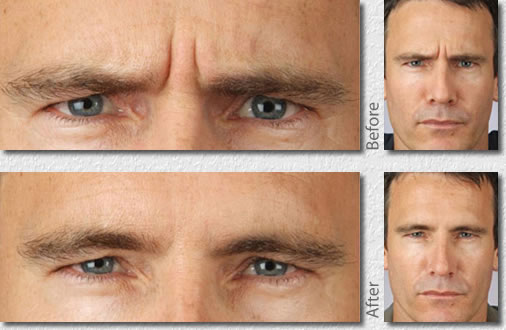
Does Botox Change The Shrink?


So I'm a little older than I used to be and recently when I look in the mirror, I've noticed some lines in my forehead when I make specific expressions.  I'm not so sure I like them; when they show up in photos, they definitely make me look older.  And yet, I know that these lines aren't just from aging, they are an occupational hazard.  Part of attentive listening in psychotherapy involves using your face to convey, in non-verbal ways, obviously, feelings and expressions and interest and even questions.  These are my quizzical lines.  Really?  Don't you think you're kidding yourself there?  Give me a break.  Not a word gets uttered, but oh so much gets communicated in silence, with the movement of just a few muscles.  Yes, Clink, here and there I have a moment of silence.   A short moment, but still.  Wrinkles as an occupational hazard.  


Every now and then I have the thought that maybe I should Botox those lines away, but my first thought is always, will it interfere with my work?  Who am I as a healthy without the Quizzical Look?  Will my patients relate to me differently?  Will they have worse/different/better therapeutic outcomes if my facial muscles are paralyzed?   Oh, and since they came from my work, can I tax deduct the cost of botox treatments?  


No worries, I'll stay wrinkled....or quizzical....as long as Clink continues to be a nun look-a-like and Roy remains a geek. 

Kamis, 01 September 2011

Guest Blogger Dr. David Hellerstein on Trauma and Resilience, Ten Years after 9/11


All New Yorkers have vivid memories of the events of 9/11/2011; and for New York-based health care workers our memories are generally mixed with feelings of frustration and helplessness. We recall how we emptied out hospital beds that day, how we were prepared in emergency rooms and clinics, and how we waited hour after hour—in expectation of a flood of patients that never came.  And we recall how in the ensuing days, weeks, and months, survivors finally entered our offices, clinics and hospitals, seared by memories and nightmares and visions they could not erase.

Patients working on Wall Street, living in Battery Park City or in lower Manhattan, those who were evacuated by boats from apartments located close by the base of the towers, people who happened to be shopping or walking in Lower Manhattan that Tuesday morning, firemen who rushed to the site of the rubble, parents who were scheduled for meetings at Windows on the World restaurant, but had to drop their kids off at school first, people who heard the first impact, and—remembering the prior attack on the WTC—immediately  left the buildings and headed North, people whose apartments were destroyed or cars were crushed or jobs were eliminated…or people who waited in the suburbs for a spouse to return on the MetroNorth commuter train, and finally concluded they would never return.  They all came, looking for help.

We remember equally vividly how many months and years it took for recovery to begin. We worked intensely to enhance the process of recovery, whether through medical treatments or psychotherapy.  All of us, patients and doctors alike, were haunted by the memories of those who never emerged from the rubble, and by the randomness of survival.  And yet we patients and doctors had a unique cameraderie as well—a feeling that we were all in this together, united against a common, though perhaps unseen, enemy.  Surely this helped with recovery, along with the expectation that life would eventually return to normal. 

For neuroscience researchers, the events of 9/11 were a sort of natural experiment, similar to the events of war.  Over the past decade, there has been significant progress in understanding the brain’s responses to trauma and what causes PTSD, and as well as understanding what may help people to recover from such cataclysmic events. It has become abundantly clear that the brain’s fear systems, commonly associated with the center called the amygdala, have incredibly tenacious memories for trauma that are extremely difficult to dislodge.

New research has brought illumination and hope to these issues.  NYU researcher Elizabeth Phelps is doing research on the neurological processes involved in the consolidation of traumatic memories, which indicates that there may be a window of time during which the deposition of such memories can be interrupted. Will this eventually provide a way to prevent PTSD, either by new types of psychotherapy or by the development of new medications that can block the deposition of such memories?

On a broader level, the events of 9/11/2001 have underlined the importance of resilience.  Some survivors of 9/11 quickly returned to their usual level of functioning, yet many others, a decade later, are still haunted by those events.  Resilience, or the ability to survive or even thrive under stress, is being studied as a neuroscience-based process. Researchers such as Avram Caspi have determined that there are genes related to resilience. Other researchers have described behavioral characteristics that are related to higher levels of resilience, such as Charles Nemeroff and Dennis Charney in their book The Peace of Mind Prescription.  (Resilience is one of the 6 key New Neuropsychiatry principles described in my book Heal Your Brain and in my blog at Psychologytoday.com).

Just to mention one key element of resilience: appraisal.  Appraisal means the way in which we interpret events.  If an event is interpreted as a threat, it evokes fear responses, including activation of the amgdala, and a series of physical responses including release of cortisol and stress hormones. Yet if an event is interpreted as a challenge, it evokes a different series of responses, including interest, calm, relaxation, and adaptive coping. And as Nemeroff and Charney note, “The hormones released by an appraisal of challenge include growth factors, insulin, and other compounds that promote cell repair, trigger relaxation responses, and stimulate efficient energy use.”


The components of resilience include:

·      Physical resilience, physical ‘toughening’ and ‘tempering’
·      Psychological resilience “situations are viewed as challenges, not threats”:
·      Activating social networks, including confiding relationships
·      Adequate external supports
·      Challenging one’s self
·      Looking for meaning through involvement
·      Learning

Now, a decade after 9/11/2001, it is possible to have almost a strange nostalgia for that moment, since we live in a world with increasingly huge problems but without clear solutions, in which day-to-day stresses seem to be continually increasing, with worsening financial and political instability, and increased polarization between incompatible world-views.  In attempting to cope with all of these ongoing and much less clearly defined stressors, the question is, what can help?

In my view, resilience is key.
*    *    *

Kamis, 14 Juli 2011

Podcast #60: On the Verge


Please take our sidebar poll and tell us who you are.
  If you don't know who you are, please guess.  
In Podcast Number 60, we discuss the following:

Questions from readers--

  • Sarebear asks: What is a Nervous Breakdown?
  • Mary and Max, an award-winning claymation movie about an 8-yo girl and a middle-aged man with Asperger's. Very educational about Asperger's, and extremely entertaining.
  • Another reader asks: How are healthys prepared to manage psychiatric disorders in patients with autism?
  • The New York Time review of a movie, Beautiful Boy, which led us in to a discussion of guilt and blame and our desire as human beings to believe we have control over what happens to us.  Too bad none of us saw the movie.
  • Finally, we talk (or perhaps "ramble" is a better word) about the psychology of podcasting.
Thank you for joining us!


****************************

This podcast is available on iTunes or as an RSS feed or Feedburner feed. You can also listen to or download the mp3 or the MPEG-4 file from mythreeshrinks.com. 


Thank you for listening.
Send your questions and comments to: mythreeshrinksATgmailDOTcom, or comment on this post

To review our podcast, please go to iTunes.
To review our book, please go to Amazon.

Rabu, 22 Juni 2011

Suicide, Free Will, and the Shrink's Magical Ability to Predict Violence


I'm posting over my fellow co-bloggers today.  So what else is new?

Please visit: Hot Grand Rounds-- The Summer Solstice medical blog posts with the pretty pictures, including a pink urinal with teeth.  One could ask for anything more?

And Please Visit Clink's post over on our Shrink Rap News blog on ethical issues related to the psychological report on the suspected Anthrax killer.   
When you're finished reading, please return Here to comment. 
---------------------------------------------------

For a while now, we've been having discussions in our comment sections  about the issue of forced treatment: is it right or is it wrong?  Some readers are very clear: no matter how sick, no matter how imminently dangerous, no one should be held in a hospital ever against their will.  One reader tells us that suicide is a right of all persons as per their free will, and by the way, healthys can't predict acts of violence and have no right pretending they can.  They should stand up to the legal system and say so, and not go along with the charade.
Both ideas got me wondering: is suicidal behavior that results in the attention of mental health professionals really a product of free will?  As healthys, many of us believe that people have unconscious motivations--- they are guided by beliefs they are unaware they hold.  People commit suicide all the time-- In 2008, 34,598 people in the United States committed suicide, making it the 11th ranked cause of death.  Somehow they did it despite the proliferation of mental health professionals.  Many completed suicide with firearms, and my guess is that these deaths often occur without the immediate involvement of healthys.  Those who wish to exert their free will to die often do so without alerting others or involving professional helpers.  It leads me to wonder if those that present to Emergency Rooms or to their outpatient healthys might do so because they have an unconscious (or not-so unconscious) desire to be stopped.  Of course there are exceptions: those who are pulled off bridges, or discovered after a serious attempt that did not kill them.  Do we not summon medical care for an unconscious overdose victim on the theory that they may have wanted to die and we're interfering with the advancement of their free will?  
We put up a poll a few weeks ago where we asked if people would want to be treated by force if they had an episode of severe mental illness.  Of our 280 respondents, a majority, 57%, said yes while 42% said no.  Would the answers have been different if I'd asked a more provocative question: If you became psychotic and believed it necessary to kill your children, would you want to be treated?  It's too provocative a question for a poll, but I thought I'd throw it out there.  If you became demented, agitated, and combative towards those caring for you, would you want to be treated with a medication that increased your risk of death over the next year from 2% to 4%?
Don't worry, I won't be that provocative. 
The issue of predicting violence is an interesting one, and our reader is right that we're not terribly good at it.  Our most powerful magical tool is to ask the patient if they're planning to harm themselves or anyone else, and the truth is sometimes more legal than medical: we're told that if we don't ask and document, that if someone kills themselves, we'd lose a malpractice suit.  It does get boring asking perfectly well appearing people if they're thinking about suicide and homicide on each visit, but it is a required check box at the clinic.  If they say yes, we ask about a plan and intent, and it does seem it might be troublesome to the family if a hospital discharges a person who says they plan to leave to go shoot up a mall.  Or someone who has been actively psychotic, disorganized, and behaving in a dangerous manner.  There's medico-legal issues, but there is also common sense and kindness, and if you believe that someone who puts the barrier of the mental health field in the way of their violence may actually want help, even if they don't put it in those terms, then there is little to argue about.  Oh, go ahead, argue anyway.
Free will?  So many people who survive suicide attempts are glad they did.  So many who attempt do so for impulsive reasons that pass, or because they were intoxicated.  I'm not much for condoning a permanent solution to what are often temporary problems.
If you want to tell us that you were hospitalized for suicidal "ideation,"  this is another post for another day: I'm still thinking about that one. 

Jumat, 17 Juni 2011

Weiner Diagnosis?

 
In Shrink Rapper world, we get a lot of email from publicists about books, TV spots, upcoming events.  This was in my spam box today:


Rep Anthony Weiner is expected to resign today after weeks of scandal surrounding his lewd text messages, tweets and photos.  Even in his tearful media conference, Weiner could not explain why he participated in such behavior.  According to NYU Medical Professor and Internist, Dr. Marc Siegel, the congressman’s behavior is systemic of a larger psychological problem, which must be addressed before fixing the addiction to online sexual activities.  
 
Dr. Siegel says, “This seems to be an example of extreme narcissism, inflated self image, depersonalization, loss of contact with reality, addiction, and the power of the Internet as a medium (like the Wizard of Oz you feel you are hiding behind the curtain)”.
 
To discuss the dangers of addiction and steps to overcome the serious illness, Dr. Siegel is available to offer is medical knowledge.  As a medical practitioner and FOX’s House Doctor, Dr. Siegel has spent years diagnosing and treating people in the national media spotlight.
 
If you are interested in speaking with Dr. Siegel, please contact me at .
 
Best,
Rena  
 
Rena Resnick

5W Public Relations

Oh my, I thought.  I read it twice. An internist is going to comment on Anthony Weiner's narcissism, motivations, sense of self, and contact with reality?   Sounds like a shrinky thing to me, but the Goldwater Rule prohibits healthys from commenting on the mental state and diagnosis of someone they haven't personally examined.  Does that mean it's okay for other specialists to talk about the mental state of someone they don't know?  Hmmm...   I guess we'll see what he has to say, but I'm not so sure about this.

Selasa, 31 Mei 2011

Daniel Carlat on Antipsychotic Medications for Agitation in Patients with Dementia


Lately, it seems like all the press about psychiatry in The New York Times is bad. We don't talk to our patients, we over-medicate them all from the children to the elderly, we all get bribes from drug companies. It's not that I don't think that these things don't happen, it's just that I don't like the sensational tones, and the one-sided nature of the presentation of healthys as bad, the generalizations that it's "everyone," and the use of information taken out of context to make our practitioners look bad.

In a May 9th article Gardiner Harris writes:

More than half of the antipsychotics paid for by the federal Medicare program in the first half of 2007 were “erroneous,” the audit found, costing the program $116 million for those six months.

“Government, taxpayers, nursing home residents as well as their families and caregivers should be outraged and seek solutions,” Daniel R. Levinson, inspector general of the Department of Health and Human Services, wrote in announcing the audit results.

Mr. Levinson apparently feels the government should collect information on diagnoses so correct prescribing can be assessed.

On CNN today, Danny Carlat writes his own response in "In Defense of Antipsychotic Drugs for Dementia."

The story highlights include:
STORY HIGHLIGHTS
  • Daniel Carlat: Report implies evil doctors are giving deadly drugs to nursing home patients
  • But antipsychotics are most effective drug for calming agitation in dementia, he writes
  • Carlat: No drugs are FDA-approved for this agitation, a terrible condition
Carlat writes:

But in this particular case, the Office of the Inspector General has it wrong, and Levinson's statements on behalf of Health and Human Services reflect an astonishingly poor understanding of the workings of medical care in general and psychiatric care in particular.
The unfortunate fact is that no medications are FDA-approved for the agitation of dementia, and yet the condition is common.

Although it's true that a prescription for antipsychotics to treat agitation in dementia is "off-label," this hardly means they are ineffective or that Medicare claims for these drugs are "erroneous." In fact, large placebo-controlled trials have shown that antipsychotics are the most effective medications for the agitation that often bedevils patients with dementia.

When these drugs are successful, they soothe the inner turmoil that makes life intolerable for these patients, improving their quality of life dramatically.

Selasa, 22 Februari 2011

The Patient Who Didn't Like the Doc. On-Line.


KevinMD has a post up today by Tobin Arthur called

Online reputation can have career implications for physicians

Arthur also refers to a post on the AMA's website back in October by Amy Lynn Sorrel,

Negative online reviews leave doctors with little recourse

Good timing because I wanted to post a vignette about a friend who is distraught about the on-line reviews he's gotten from patients. To protect both the innocent and the guilty, I'm confabulating the details & demographics, but the gist of the story is real and I'd like to hear your comments.

Dr. Tom Shrinky (not his real name) is a friend of mine who practices in Sanetown, PA (not a real place). He's an excellent healthy with a great reputation, a packed practice with a long wait for new patient entry, and he's as conscientious as they come: he carries his cell phone everywhere and he returns all calls within the day. Plus, he's a nice guy, though I may be biased because we're friends.

One day, a patient says to Dr. Shrinky, "Doc, you know, I Googled you, and it wasn't pretty." Alarmed, Tom goes to Google himself and discovers that he's got a patient review up on one of these rate-your-doc sites. The comments are strangely personal, they comment on his recent weight loss, and say that he's in bed with the drug companies. There are a couple of other reviews, all 5 star, all saying how he's the best shrink in the world, but his overall rating is 3 star, and you'd wonder if he wasn't dying from the comment.

Okay, you hate a restaurant, you zing it on Yelp and you don't go back.

But Tom believes he knows who put these comments up. He has a patient, a lawyer he sees for weekly psychotherapy sessions. The patient is often hostile towards him, often treats him in a demeaning fashion, and this relationship does not feel good. The patient left treatment once briefly, years ago, but returned because, "You shrinks are all nuts and you're better than Dr. Cashew." Why Tom took him back, I'll never know. Tom tries to get the patient to focus on his hostility as part of the treatment.

So, a drug rep did stop by the office once to drop off samples while the patient was in the waiting room, and the patient had made a comment about this. And Tom had lost a lot of weight recently-- he'd taken up running and before he knew it, he was doing half-marathons. He cut back on carbs, beer and soda, and 60 pounds had dropped off him over 14 months. He looked great, and everyone commented including his patients. This particular patient, however, had said nothing, and one day walked in, looked Tom up and down, and said, "Have you got cancer or AIDS?" So the comment on the review about how he'd lost a lot of weight recently and looked like he had cancer. Tom could think of no one else who was unhappy with him or who would do this.

Unlike the restaurant patron, Tom's patient continues to show up weekly for psychotherapy. Tom feels a bit intimidated by him (this is not new) and is always happy when he cancels. So far, Tom hasn't asked if he wrote the review, but it bothers him. Others have put up counter-reviews, but there is a second bad review, and Tom thinks this is also the same patient. A colleague mentioned that a patient he tried to refer would not see him because of the reviews.

So, my thoughts, and then please do add yours:

--It seems to me that sometimes people have negative feelings in the course of a psychotherapy (ah, we might call this transference, but it would be dismissive to attribute all negative feedback to negative transference). In this case, it's no longer a doctor-patient issue, but one that has potentially included the entire world via the Internet.

--Should Tom ask his patient if he's put up the reviews? What does that get him? The patient may become embarrassed or defensive, or he may say he didn't do it (and maybe he didn't?) and be angry at the accusation.

--How does a healthy (or any doctor) continue to treat someone who publicly struck at their reputation?

--And here's another problem for the doc--- a patient who would do this might also go to the physician licensing board and complain, and so Tom may worry that to terminate this patient's care may incite the patient's anger and result in a complaint and investigation of his practice. The patient is a credible professional and a complaint from him would likely be taken quite seriously. While Tom is certain he's provided responsible care and has not violated any standards of practice, he's well aware that a Board investigation (if a complaint did progress to that) takes years and causes a great deal of expense and agony, and so he may well be worried about fanning any flames.

--And finally, Tom is worried about upsetting the patient. He's been taking care of this patient for years, and he doesn't want this to end badly.

So what should Dr. Tom Shrinky do?