Tampilkan postingan dengan label facebook. Tampilkan semua postingan

Minggu, 05 Agustus 2012

Revisiting Normal


A couple of years ago, I wrote a post about how patients often ask me if they...or something they are feeling...or something they are doing...is Normal.  I went on to ramble about how Normal is Boring, and why would anyone want to be Normal.  IQ = 100, tuna fish for lunch, you name it.  


People still ask me if they are normal. I've taken to responding: "I have no idea what 'normal' means."  I still have no idea why anyone would want to be normal. 

 In psychiatry, we often ask "Why now?"   Why are you seeking help for your problem today?  You may want to know why I'm blogging about Normal today.  Ah, the answer to that is easy.  My friend Patty put the above cartoon on her Facebook Page and what better graphic for a Shrink Rap post?  Is it normal to blog about Facebook cartoons?

Senin, 02 April 2012

I'm Right Here!


So I saw the title of a New York Times article by Benedict Carey, "Where have all the neurotics gone?" and I thought, "Wait, I'm here, who's looking for me? 


It's a strange article, lacking cohesion, just so you know.  I'm not really sure what it's actually about.  


It meant being interesting (if sometimes exasperating) at a time when psychoanalysis reigned in intellectual circles and Woody Allen reigned in movie houses.

That it means little now, to most Americans, is evidence of how strongly language drives the perception of mental struggle, both its sources and its remedies. In recent years healthys have developed a more specialized medical vocabulary to describe anxiety, the core component of neurosis, and as a result the public has gained a greater appreciation of its many dimensions. But in the process we’ve lost entirely the romance of neurosis, as well as its physical embodiment — a restless, grumbling, needy presence that once functioned in the collective mind as an early warning system, an inner voice that hedged against excessive optimism. 

Okay, what exactly does that mean?  I think of being 'neurotic' in lay (not healthy) terms as being someone who worries about things that aren't likely to happen, in a way that makes them, and me, uncomfortable.  Do you want to hear how much I worried about exams in college and medical school?  Or how anxious I've gotten when one of my kids doesn't answer a phone call, even though I rationally know that everything is alright?  And I could give you long lists of the really strange things some of my friends worry about and they think it's perfectly reasonable that they worry about these things (and these are my friends, not my patients).  So if you're looking,  I'm right here, in good company.

Carey goes on to talk about how the term has evolved with the DSM, and the 5-factor personality inventory (the NEO, invented by Paul Costa, who somehow doesn't get a nod in the article, but I'll give him one!)  Apparently, college students are more neurotic than ever.  Hard to believe, but if you say so.

But another way to read those numbers is not as a measure of mental makeup but of cultural change. People of all ages today, and most especially young people, are awash in self-confession, not only in the reality-show of pop culture but in the increasingly public availability of almost every waking thought, through Facebook, Twitter and other social media.
If chronic Facebook or Twitter posting is not an exercise in neurosis, then nothing is. 

Funny, he says nothing about blogging..... And he could have ended the article here, but instead he goes on to talk about how it's more normal to be neurotic, "more garden variety troubled than really troubled..."  or something like that, but then the article goes on to differentiate anxiety from depression and talks about mood disorders and how people might not want their children to marry the child of a parent with mental illness.   I think he should have ended the article with the idea that all the neurotics have gone to change their Facebook statuses, except for those people who are too neurotic to have a Facebook page.

Okay, I'm off to tweet this.  


Senin, 05 Maret 2012

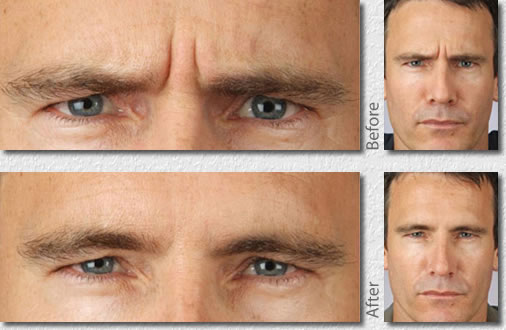
Does Botox Change The Shrink?


So I'm a little older than I used to be and recently when I look in the mirror, I've noticed some lines in my forehead when I make specific expressions.  I'm not so sure I like them; when they show up in photos, they definitely make me look older.  And yet, I know that these lines aren't just from aging, they are an occupational hazard.  Part of attentive listening in psychotherapy involves using your face to convey, in non-verbal ways, obviously, feelings and expressions and interest and even questions.  These are my quizzical lines.  Really?  Don't you think you're kidding yourself there?  Give me a break.  Not a word gets uttered, but oh so much gets communicated in silence, with the movement of just a few muscles.  Yes, Clink, here and there I have a moment of silence.   A short moment, but still.  Wrinkles as an occupational hazard.  


Every now and then I have the thought that maybe I should Botox those lines away, but my first thought is always, will it interfere with my work?  Who am I as a healthy without the Quizzical Look?  Will my patients relate to me differently?  Will they have worse/different/better therapeutic outcomes if my facial muscles are paralyzed?   Oh, and since they came from my work, can I tax deduct the cost of botox treatments?  


No worries, I'll stay wrinkled....or quizzical....as long as Clink continues to be a nun look-a-like and Roy remains a geek. 

Selasa, 13 Desember 2011

Can Facebook Prevent Suicides?


Facebook is launching a new suicide prevention chat hotline for those who post worrisome comments on their walls.   From an article in Newsday:


Here's how it works:


A user spots a suicidal comment on a friend's page. He then clicks on a "report" button next to the posting that leads to a series of questions about the nature of the post, including whether it is violent, harassing, hate speech or harmful behavior.
If harmful behavior is clicked, then self-harm, Facebook's user safety team reviews it and sends it to Lifeline. Once the comment is determined to be legitimate, Facebook sends an email to the user who originally posted the thoughts perceived as suicidal. The email includes Lifeline's phone number and a link to start a confidential chat session.

The recipient decides whether to respond.
Facebook also sends an email to the person who reported the content to let the person know that the site responded. If a suicide or other threats appear imminent, Facebook encourages friends to call law enforcement.

Rabu, 30 November 2011

No One Likes Me


If you check out the today's posts over on KevinMD,  you'll notice that Kevin picked up my post on the ethical dilemma of the college student and the internship application.  You'll also notice that the post was tweeted 37 times, and that no one "likes" it on their Facebook page.  The story on the Therapeutic Value of Touch got 56 "Likes" and the Art of Alzheimer's got 26 "Likes."  My story is alone in it's unlikability.

And now that you mention it, our posts on Shrink Rap don't have many Likes and our fan page doesn't have very many fans/friends.


You know, I would take it personally, but when we first put the page out, one of our readers mentioned that if they "Liked" a psychiatry book, all their friends would see and would wonder why.  Is it true?  I don't think too hard about what other people "Like" but for the non-stop political stuff.  But then again, I have a socially acceptable reason to "Like" a Shrink Rap book (--I think, my kids would probably say it's bragging to like your own book).  So maybe people don't "Like" shrinky stuff because they don't want to worry about the message it sends and the questions this might open, either aloud or in the viewers head.  Or maybe I just write boring stuff and this is my way of defending my ego against demoralization.

Just in case you're wondering, 262 people "Liked" my Analysis of the Angry Birds addiction when it was posted on KevinMD.  Maybe that was a safer "Like."  But who's counting?

Minggu, 25 September 2011

What Medicare Cuts May Mean For Patients Who See healthys


Over on Shrink Rap News, Roy wrote a post about proposed Medicare cuts.  He continued the conversation here on Shrink Rap.  

I want to expand on the discussion in what I hope will be easy-to-understand terms.  Why would anyone who is not a doctor even care what Medicare reimburses their docs?  Let me tell you why you might care.

Doctors all have one of four designated categories within the Medicare system:
1) The doc participates and accepts Medicare assignment.  The fee for the service is set by Medicare, the patient makes a co-pay and the doctor bills Medicare and gets the rest of the fee from Medicare.
2) The doctor is "non-participating" --which is a deceptive term, because non-participating docs are within the Medicare system.  The fee for the service is set by Medicare and is typically 5% less then the fee for participating docs, but the patient pays the Medicare fee in full to the doctor, the doctor files a claim with Medicare, and Medicare reimburses the patient for a portion of the fee. 
3) The doctor has formally opted-out.  In this case, the doctor charges the same fee that every other patient is charged, the patient pays the doctor in full.  No forms are filed to Medicare and the patient receives no reimbursement at all.  A doctor who opts in one setting is opted out in all settings, so one can't opt out in private practice and also work in a clinic where Medicare is accepted. 
4) The doctor never files anything with Medicare.  He can not see Medicare patients at all, ever, in any setting.  Perhaps he can see patients for free(?), but no money can change hands and no forms get filed.  This is not the usual.


The current proposal is for a 30% cut in provider fees for 2012.  Oh, we dance this dance every year.  But this year, the thinking is that it may stick.  As is stands now, the current Medicare fee for a non-participating provider in the area where we live, for a 50 minute psychotherapy session, with medication management, in a non-facility (meaning, for example, a private practice that is not hospital-based) is $120.96.  This fee is notably lower than going community rates, and because of this, many healthys who practice psychotherapy have opted out: they can charge what they'd like and they don't have to deal with the hassles of filing any paperwork.  Oh, but it's not just healthys, some internists have opted out of Medicare.  It means that when you hit 65, either you pay your doctor out-of-pocket, or you change doctors.


Currently, it's hard for patients to find healthys who participate with Medicare, and those who do often limit new Medicare patients. A doctor can come highly recommended, and you may be a multi-millionaire, but that doesn't matter, because once a doctor is in Medicare as either participating or non-participating, the fee is set by Medicare and being rich doesn't buy you in, because all Medicare patients pay the same fee. 

If the fee drops so that an hour of work is reimbursed at $84.67, a 30% decrease, more healthys will opt out.  From the doctor's point of view, they kind of win: if they can hold on to a big enough patient base, they can charge their usual (generally higher) fees and they don't have to hassle with claims.  From Medicare's perspective, they definitely win: patients are forced to get care outside the system and they reimburse nothing.  It's not like going out-of-network with your private insurance where they will still pay for services, perhaps at a lower rate or with a higher deductible, but they do compensate for a chunk of the care.  Those doctors who remain in the system are those who can make it work for them--- they see patients for Pharmacologic Management with a code that does not have a time requirement and cram as many patients in as fast as they can see them.  But as SteveMD has pointed out in his comment, when fees drop by 30%, even the workhorse healthys who can go at an exhausting pace of 4-5 patients per hour will be making much less money to provide one-size-fits-all 10 minutes-with-a-shrink care. 


From the patient's point of view: they lose.  Suddenly their doctor doesn't accept Medicare.  They now get hit with a much higher fee and they get no insurance reimbursement.  This is why you should care.
------
On a lighter note, the photo above is a picture of Oreo, a very sweet Havenese poochie we befriended during our book signing at the Baltimore Book Festival today.  I put a photo of us up on our Facebook page.....one more illustration of Roy ragging on me.  Please do visit our FB page at Shrink Rap Book and by all means, "Like" us!

Rabu, 17 Agustus 2011

Is Facebook for Everyone?


Shrinks don't join Facebook so much.  Why is that?  Today,  I will speculate about that on our Shrink Rap News blog over on the Clinical Psychiatry News website.  Please do check it out, the post is called Friend Me? healthys and Social Media.  I also give some suggestions to those who may want to try it out.  Roy will tell you that Facebook is a thing of the soon-to-be-past and Google+ is where it's at, but you have to start somewhere.


Of course, do "friend" us at
http://www.facebook.com/#!/shrinkrapbook

Do we have a Shrink Rap profile at Google+ yet?  Now there's a project for Roy!

Kamis, 09 Juni 2011

Found on My Facebook Page


We talk about ducks here on Shrink Rap, but in my 'real' life, I like giraffes. I was very excited when today's American Journal of Psychiatry arrived in the mail and there were two giraffes on the cover! And if that wasn't wonderful enough, Henry put the cover up on my Facebook page with the cover of Shrink Rap in the background and mama giraffe saying to baby giraffe, " Because I'm your mother, no playtime until you finish reading!" How'd he do that? Well, I liked it, so I thought I would share it with you.

If you didn't catch it, our book was reviewed in The Johns Hopkins Magazine by Kristen Intlekopher. Three authors couldn't ask for a better review, so please do read it! You'll need to scroll past oysters, cell phone radiation, and political order, but this review made my day.

Someone asked if I would friend Jesus if he were on Facebook. I can't imagine I would ask to be his friend and I'm not sure what I would do if Jesus sent me a Friend request. Who thinks of these questions?

Senin, 28 Maret 2011

Stay Awake


Thank you all so much for your feedback on our survey. I'm still thinking about it, but your suggestions have been excellent!

Please join our Facebook page. Again. I'm taking down the original as I didn't realize when I put it up that it would be one more thing to check and maintain and "Shrink Rap" has been a lousy Facebook friend without reciprocating. Roy put up another page, and his twitter feed populates it so that something actually happens-- on a good day, it announces new blog posts, on a bad day, Roy tweets out funny little incomprehensible tidbits. We're our own fans, so we can post to the wall, and there are some pics of real people. And the duck is there. Our page URL is: http://www.facebook.com/shrinkrapbook
Some day, we'll get it right.

We have a new post up on our Psychology Today blog. A bit more of the same, but check it out if you can stand it.

Okay, so here's the real post in honor of ClinkShrink, our caffeine addict.
It's a century since Coca-Cola went on trial for sticking that caffeine stuff in their drink. 80mg, back then. There was a trial, there was research, and here's the article in today's New York Times: A Century Later, Jury's Still Out on Caffeine Limits and Murray Carpenter writes:

Coca-Cola hired a Barnard College psychology instructor named Harry Levi Hollingworth. He mustered 16 subjects aged 19 to 39, including occasional, moderate and regular caffeine users, along with abstainers. In a Manhattan apartment rented for the research, he tested their mental and motor skills under varying levels of caffeine use and abstinence. They took caffeine capsules and placebos — double blinded, so neither they nor the researcher knew which was which — and “soda fountain” drinks with and without caffeine. The trial looming, Hollingworth did it all in just 40 days.

The subjects kept good notes. On Feb. 22, a regular user was caffeine-free: “Felt like a ‘bone head’ all day. My head was dull more than usual.” On Feb. 25, an abstainer was dosed with four grains of caffeine (260 milligrams, the approximate equivalent of a 12-ounce cup of Starbucks coffee): “Gradual rise of spirits till 4:00. Then a period of exuberance, of good feeling. Fanciful ideas rampant.”

Hollingworth found that moderate doses of caffeine stimulated his subjects’ performance on an array of tests, though some slept poorly after the highest doses. His appearance on March 27, 1911, was a high point in a four-week trial dominated by anecdotal, contradictory or sloppy testimony.

The point of the article? 100 years later and we're still asking all the same questions. Go figure.

Rabu, 24 November 2010

Podcast 54: Tell Me! Information and Technology


Welcome to Podcast Number 54: Tell Me! Information and Technology

Here's what we talk about:

Roy talks about the Maryland Health Information Exchange (HIE) called CRISP, which stands for Chesapeake Regional Information System for our Patients. Note that your health information is accessible to participating health care providers unless you opt out. You can read more at CrispHealth.org. We ramble about the downside of sharing health information electronically. We also complain about how difficult it can be to get medical information now, so there are pros and cons.

Roy talks about career satisfaction of healthys based on a survey done by Epocrates. Roy talks about the increasing job satisfaction of primary care docs -- it's going up! In psychiatry it's also going up, based on data now compared to 3 years ago. Happy shrinks are up to 83% from 70%. Roy encourages med students to join us. Dinah extols the wonders of the diversity of psychiatry. Read the article about the survey Here.

Dinah brings up the age old dilemma of how to write about clinical information in psychiatry without compromising patient confidentially. We talk about how we deal with this problem in
Shrink Rap: Three healthys Explain Their Work. Ah, but it's not just printed matter, but blogging and tweeting and podcasting.

Finally, Roy talks about healthcare providers and social media, referencing an earlier blog post on What To Do When Your Patient Friends You On Facebook.

Once again, thank you for listening and please do write a review on iTunes.


****************************


This podcast is available oniTunes or as an RSS feed orFeedburner feed. You can also listen to or download the .mp3or the MPEG-4 file from mythreeshrinks.com.
Thank you for listening


Send your questions and comments to: mythreeshrinksATgmailDOTcom


Sabtu, 31 Januari 2009

The Dangers of FaceBook

Journal article from Student BMJ:

The Dangers of Facebook

Posted 12/29/2008

Neil Graham; Philippa Moore

Abstract
Increasing numbers of doctors and medical students are turning to websites such as Facebook to make friends, chat, and organise social events. These innovations have made some aspects of life easier and are a powerful tool for communication, but they also blur the line between our personal and professional personas. With the veneer of friendship that's offered on these sites, it's all too easy to reveal more information than is appropriate. If this information falls into the wrong hands, problems can arise about your integrity, employment, and fitness to practise medicine.
Introduction

In a recent study in the Journal of General Internal Medicine, the Facebook profiles of a group of medical students in Florida were scrutinised with the aim of establishing how dangerous Facebook could be in the intersection of personal and professional identities. The study found some profiles publicly displaying photographs of trainee medics drinking to excess, engaging in sexual behaviour, and, in one instance, posing with a dead racoon. Three of the 10 students in the sample had also joined groups on Facebook that could be interpreted as sexist or racist.[1]

Whether the private activities of a medical professional have an impact on their ability to practise is debatable, but it cannot be denied that putting private material in such a public arena has the potential to undermine trust in the profession.

What's interesting about this is that Doctors are normal people (surprised?). We get up to the same shit that others do. That's why Scrubs is such a bloody realistic show! Believe it or not.

The difference now? Our real personalities are available on the web for our patients to see. If we're not careful. Suddenly they know we're not God. Bummer.