Tampilkan postingan dengan label insanity. Tampilkan semua postingan

Kamis, 25 Oktober 2012

What I Learned Part 1

Those of you who have been reading the blog for a while know that every year I blog and live-tweet from the American Academy of Psychiatry and Law conference. This year we are hosted in Montreal, the land of fine dining and the most beautiful language in the world. Thus, the foodie picture. When I fly back I will be carrying extra baggage and I don't mean my luggage.

The poster session this morning was quite crowded and I wasn't able to get near most of them, but I did see a lot about legal and clinical implications of synthetic marijuana. Forty-one states have laws criminalizing sale and use of these new chemicals which go by a variety of street names. Effects on mental state can be extreme, including disorganized and violent behavior and hallucinations. So far there are no known longterm clinical effects associated with its use, however. Intoxication has been used in criminal defenses to mitigate culpability (although not generally successful as the basis for an insanity defense) and in states where the substances are still legal courts are struggling to figure out how it should play into a mental state defense.

Dr. Charles Scott gave an outstanding presidential address entitled "Believing Doesn't Make It So: Forensic Education and the Search for Truth." He discussed the evolving---and higher---expectations for forensic evidence, including psychiatric testimony, and how this should inform forensic training and practice.

The next session was a very nice (if I do say so myself) panel presentation about civil commitment of mentally ill offenders following release from prison. California has a mandatory civil commitment law which requires transfer of certain violent offenders with serious mental disorders to a psychiatric hospital at the end of incarceration. Legal challenges to this law were discussed and compared to the New Jersey system, which uses a non-mandatory administrative procedure instead. Finally, these procedures were compared to the state of Maryland where there is no established transfer policy but a wide degree of consultation and collaboration between the correctional and mental health systems, which in many cases obviates a need for hospital transfer.

[At this point in the day I stepped out for lunch and came back four courses later. Oh my, the food was amazing.]

The afternoon session was a very practical panel presentation about who should get access to forensic reports and the implications of HIPAA on evaluee access to protected health information in the report. Historically forensic reports were considered legal work products rather than medical documents, and as such an evaluee did not necessarily have a right to get a copy of or read the report. Under HIPAA some types of reports---such as a disability evaluation or fitness for duty evaluation---might be considered to be protected health information which an evaluee has a right to access. This is an evolving area, however. And under HIPAA, evaluees do not have a right to reports generated for civil, criminal or administrative hearings. This isn't a settled issue and there was good audience discussion.

The evening session was a mock trial which presented the new DSM 5 proposed criteria for hebephilia. The limitations and implications of the new criteria were discussed, which appeared to rely heavily upon an assessment of the victim's Tanner stage. The issue was presented in the context of a fictional sex offender civil commitment hearing, with three mock experts: one for the state, one for the defense, and one independent court-appointed expert. A strong case was made against inclusion when the defense expert testified that the new criteria could result in an 80 percent increase in false positive diagnoses.

So that was the first day. More to come so stay tuned. Live-tweets can be followed at: www.twitter.com/clinkshrink. [For those concerned about speakers' informed consent for social media coverage, all presenters are advised at abstract submission that sessions are recorded and they know that sessions may be covered by the media.]

Kamis, 16 Februari 2012

The End of the Stories: Patient A

Thank you to everybody who commented on my hypothetical jail patient scenarios in my post Send Them Away. I thought it was interesting that people with different professional backgrounds and levels of experience pretty much agreed on what to do, who to keep and who to send out.

Since people seemed to enjoy speculating on the back stories, I thought I'd supply the endings.

Patient A was kept in the jail and admitted to the infirmary. After a few days of medication he quickly got better and was able to tell you what happened since his last release. His mother tried to get him an appointment at the local mental health clinic shortly after he got home, but she was told there was a three month wait until the first available appointment and that she should call the police or take him to an emergency room if it was an emergency. After he ran out of his thirty day supply of release medication he went to the emergency room to get it renewed, but when he ran out of meds a second time he was told he could no longer get his meds renewed through the emergency room. It didn't really matter though since his benefits were cut off while he was in jail and he couldn't afford them anymore anyway.

His mental state went downhill quickly after that. His mother, the much-beloved Cookie Lady (as she was known in the neighborhood), didn't stand much of a chance. I'll spare you the details. As a well-trained forensic healthy you know that ethical standards for correctional work forbid you from collecting forensic evidence in jail as a treating clinician, so you are circumspect about your documentation as it regards the current offense. Eventually, an outside forensic evaluation is done and Patient A becomes an insanity acquittee. He is transferred to a forensic hospital.

Immediately after the verdict, there is public uproar. The local newspaper publishes an opinion piece calling for reform of the public mental health system and looser standards for civil commitment and involuntary treatment. A state delegate proposes legislation for outpatient civil commitment. The governor organizes a task force to study the issue and the entire police force is required to undergo crisis intervention and mental health training. Mental health advocates decry Patient A's incarceration, loudly insist that jail couldn't help anybody, and accuse the jail (not you in particular, but the jail) of giving lousy, horrible, inadequate or nonexistent care. (Meanwhile, the somatic jail doc has diagnosed Patient A's new-onset diabetes and Patient A is getting a diagnostic workup for the lump that was discovered on his admission physical---it turned out to be benign. Because of patient confidentiality, none of this can be revealed to the public but you know it.) Meanwhile, on the newspaper internet discussion board some people express outrage that "that dangerous nut case" should have been sent to prison forever, given the electric chair, or made to undergo the same horrible acts he did to his mother. Patient A reads all about this in the newspaper delivered to his ward, and hears about it on the ward television news reports.

Years later, many years later, Patient A is quietly granted conditional release by a sympathetic judge, with the support of the local state's attorney. He goes to live back in his old neighborhood---now gentrified beyond recognition, where he spends a few minutes every morning sipping coffee at the corner Starbucks. His neighbors---a young attorney fresh out of law school, a music student at the local conservatory, and a young couple who work for the local newspaper, see him there and exchange casual greetings. They think he is a shy but likable guy, a quiet but kind person. They enjoy having him as a neighbor.

Minggu, 05 Februari 2012

More Forensic Stuff


I'm going to apologize to regular readers for missing your usual Shrink Rap fare. This blog isn't usually this heavy into forensic topics but since Dinah is on hiatus, I'm commandeering the blog to talk about my own interests.

I wanted to address some ideas Sunny brought up in my last post. Her comment was: "...I can't figure out why it is that when a psychotic person commits a crime, that "they" send the person to jail to take psych drugs so that they can become "normal" to stand trial. Weren't they mentally impaired at the time of the incident? Why would we, as a society, not consider the state that person was in at the time of the crime? I wonder how those people feel, when they "wake up" from a psychosis to find that they killed people. It must be awful."

There's a lot to talk about here. The first issue is why people have to become 'normal' to stand trial. This is something that is required by the American constitution. The Sixth Amendment gives every defendant the right to call and confront accusers. While defendants can voluntarily give up their right to be present at trial, they can't otherwise be tried in absentia. If someone is too mentally ill to understand what's going on in the courtroom, that's considered an absence (physically present, but mentally 'in absentia'.) This is the origin of the requirement for competency to stand trial.

The state---or more properly, the defense---does consider the mental state of the person at the time of the offense. This is done through a category of defenses known as 'mens rea' defenses---criminal defenses based upon some aberration of mental functioning. There are a lot of them: extreme emotional disturbance, heat of passion, intoxication and insanity. Mens rea defenses don't generally lead to an acquittal---the person doesn't 'walk'---it just reduces the level of guilt. So, for example, instead of being guilty of first degree murder a defendant may only be guilty of involuntary manslaughter. Exactly what you have to prove to make your case about the mental state will be determined by the law. Each state will have statutory or case law that defines insanity or other various mens rea situations.

The states takes mental state into account at sentencing, too. The defense can introduce all kinds of mitigating information for the judge (or jury, in a death penalty case) to consider.

Regarding how insanity acquittees feel when they 'wake up' and realize what they've done: oh yeah, awful---really awful. Particularly since many insanity acquittees commit offenses against their own families. (See the New York Times article I linked to in my last comment on yesterday's post.) Sometimes you wonder which is worse for them: the symptoms of active psychosis or an awful reality.

Kamis, 04 Agustus 2011

Lessons from Guiteau

Over the last few days I've been reading online discussions and blog posts about the Norwegian spree killer and also reading a book on Google about Charles Guiteau, President Garfield's assassin. I thought it was a bit eerie how similarly the arguments sounded for and against insanity, and how little has changed regarding attitudes toward politically-motivated violence in the last 130 years. I put up a post about the topic over on Clinical Psychiatry News. For more, see Political Violence: A Challenge for Forensic healthys.

Minggu, 03 Juli 2011

Voices From Within


Tonight CNN will be airing a documentary shot inside the old St. Elizabeth's Hospital, made by patients, about insanity acquittees. This is a very rare opportunity to see the realities of daily life for those found insane and learn more about the insanity defense. For more see the CNN story here.

Jumat, 17 Juni 2011

Budgets, Crime and What Happened to Stephanie

From the New York Times today we have a story entitled, "A Schizophrenic, A Slain Worker, Troubling Questions," a horrible story about a mentally ill man who killed a social worker in his group home. The story highlights the defendant's longstanding history of violence with several assaults in his past. He once fractured his stepfather's skull and his first criminal offense involved slashing and robbing a homeless man. (On another post on this blog Rob wondered why the charges were dismissed in that case; from experience I can tell you it's probably because the victim and only witness was homeless and couldn't be located several months later when the defendant came to trial.) The defendant, Deshawn Chappell, also used drugs while suffering from schizophrenia. Before the murder he reportedly stopped taking his depot neuroleptic and was symptomatic. The news story also suggested that he knew he was committing a crime: he got rid of the body, disposed of the car and changed out of his bloody clothes. Nevertheless, he was sufficiently symptomatic to be found incompetent to stand trial and was committed to a forensic hospital for treatment and restoration. At his competency hearing the victim's family thought that the defendant was malingering his symptoms, while the victim's fiance was distraught enough that he tried to attack Chappell in the courtroom. The point of the Times article appears to be an effort to link the crime to cuts in the Massachusetts mental health budget.

So what do I think about this story? (As Dinah would say, this is a 'Clink' thing.)

About the crime itself I have little to say. There's nothing that out-of-the-ordinary or unusual about this as a forensic case. I have no opinion about his legal sanity since I know nothing other than what's presented in the media (and I've had enough of my own cases covered in the media myself to take what I read with a large grain of salt!). Frankly, these kind of cases happen every day as you could tell by following the Psychiatry and the Law twitter feed.

Why does this story, of all the potential psychotic killer stories, showing up in the New York Times, and why is it showing up now?

Because New York is trying to "beef up" their assisted outpatient treatment law, of course. And the Times has come out in favor of it. They've had other articles in the paper promoting assisted outpatient treatment.

Now, I'm all in favor of advocating for improved mental health services as well as adequate training and reimbursement for well-qualified mental health staff. I just wish they wouldn't feed into the fear and public stereotyping of seriously mentally ill people to do it. That's my first reaction to this piece.

My second reaction is in response to this quote:

"The first time Mr. Chappell secured a state hospital bed — and the treatment that comes with it — was when he ended up behind bars."
And the observation by Chappell's mother:
"In 2007, Mr. Chappell, sentenced to a year in jail but required to serve only three months, ended up at the prison psychiatric hospital. When his mother visited him there, she said, she was heartened to see the effects of an enforced medication regimen. “This was the son I raised,” she said. “He talked about going back to school and getting a college degree.”
I'm going to link back to those quotes the next time I hear somebody comment that "locking people up doesn't do any good." There are some people---fortunately relatively few---who can only be treated in a secure environment because they are just too repetitively assaultive to be treated anywhere else. That's what forensic hospitals and prisons are for.

Selasa, 25 Januari 2011

Podcast Number 55: What Happens to Shooters with Mental Illnesses?


There has been a lot in the media recently about mental illness and it's relationship to violence.
In this episode we have ClinkShrink walk us through what happens to a mentally ill defendant in a violent crime. First, there is the question of Competence: is the defendant able to meaningfully participate in his/her trial, this is the present mental capacity. If the defendant never becomes competent, he generally remains in a forensic facility indefinitely. At some point (10 years in our state for a capital crime), the law requires a final disposition, and the defendant who is not likely to ever attain competence will be civilly committed and will remain in a forensic facility.

The second question is one of sanity at the time of the crime. ClinkShrink talks about the complexities of insanity evaluations and the rarity of having a Not Criminally Responsible plea. We discuss the idea that incidental mental illness is not enough to be found not guilty by reason of insanity, that the mental illness must have influenced the criminal behavior or obscured the defendant's ability to appreciate the criminality of his behavior. Finally, Clink talks about what happens after an insanity acquittee is released and what type of aftercare planning gets put into place.

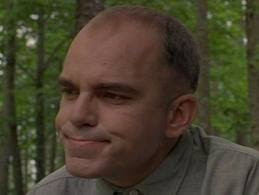
The photo is Billy Bob Thornton in Slingblade--he's our example of an insanity acquittee.

Once again, thank you for listening and please do write a review on iTunes.


****************************


This podcast is available oniTunes or as an RSS feed orFeedburner feed. You can also listen to or download the .mp3or the MPEG-4 file from mythreeshrinks.com.
Thank you for listening


Send your questions and comments to: mythreeshrinksATgmailDOTcom

Kamis, 13 Januari 2011

What I Want From ClinkShrink, by Dinah


Dear ClinkShrink,

Thank you for writing your post yesterday in response to requests for your input on the tragedy in Arizona. I liked reading about The Killers I've Known (or rather the killers you've known) and certainly I enjoyed revisiting your article on Shooter Psychology. And it does seem to be true that we all pester you every time there is a mass shooting.

I know you can't really comment on the motives of a mass murderer whom you've never examined.

Here is what I think it would be interesting for you to write about, if you want to. Or maybe if our readers bother you because they seem to have more influence than I do.

I'd like to read about the process of what will happen to the man who committed this heinous act. The descriptions in the news paint a picture of a man who may have been mentally ill or under the influence of drugs, or both. So what happens from here? Does he go to jail or to a psychiatric facility? How is it determined if he was mentally ill? What sorts of documents are examined and what sorts of people (if any) are interviewed? If he's found to be unable to stand trial, how does that work? Will he be treated with medicines? If he's very psychotic, might the medicines make him much better, and how would play out? Could he then stand trial? I'm going to assume that there's no chance (I hope) that he will be released back into free society, at least not now. What factors influence whether he is found not guilty by reason of insanity (does that designation even exist anymore?) And where does he go if he's found to be a) mentally ill and unable to understand the consequences of his actions, b) mentally ill but able to understand that what he did was wrong, c) that drugs were part of the picture or d) not mentally ill and fully able to understand what he did. How much difference does it make as to which state someone lives in who does something like this in terms of where he might end up? And in death penalty cases, does his mental state matter at the time of the crime? At the time of the trial? At the time of execution?

So perhaps I want you to give us a full forensic fellowship in a blog post. You are a good sport. It seems we're going to hear a lot about gun control and tea party's and political agendas and obstacles to treatment of the mentally ill and what obligation society has to prevent such atrocities. You have something different and important to add.

Cheers,
Dinah

The Killers I've Known

Some blog readers have been asking for a post about the Arizona shooting incident. The issue of spree killing has come up on the blog before, after the Amish killings in Pennsylvania, after Virginia Tech and the Fort Hood incidents. This will officially be my third poster about shooter psychology and it's getting hard to find something new to say.

First of all, most murderers don't have multiple victims. According to the Uniform Crime Reports, the number of multiple-victim killings has remained pretty stable over the last five or so years, at about 350 per year. Almost all multiple victim killings are committed using guns, although in 1987 there was an anomaly in which 24 people were killed by poison. More about that later.

In most cases, the killer knows the victim and that's true both for single and multiple victim offenses. The nature of the relationship varies with the setting and type of killing: spree shooters most often kill co-workers or other students, while single victim killers murder their partners or drug acquaintances. Psychotic killers will usually murder a caretaker, a mother or wife, but only if the killer is a young male. Female psychotic killers tend to kill their children. It's rare for a psychotic killer to murder multiple strangers. Locally I can recall only one case like this over the last twenty years. In this case the killer suffered from a grandiose delusion, and the victims were killed in a car crash. Psychotic people can stalk or threaten political or other high profile figures, but this usually doesn't result in violence. Typically what motivates psychotic political stalkers is a delusion of some type, for example the belief that a political (or other stranger victim) is threatening them in some way. For example, one political stalker I examined believed that a U.S. Senator was a devil worshiper, and that he was destined to kill all devil worshippers. Another psychotic letter writer had a delusion about the president, although he was so thought disordered it was a little hard to sort out the "logic" behind the delusional motivation.

Multiple victim killers could be spree killers or serial killers. That 1987 anomaly with the poison deaths was partly due to Donald Harvey, a serial killer in Ohio who poisoned patients at the hospital where he worked.

Non-psychotic spree killers have the same motivations as "regular" single victim murderers: frustration over the loss of a job, the loss of a relationship, loss of a living situation, lack of money or friends, alienation from family and substance abuse. Killing is an act of desperation whether you're killing one person or many. Political motivations may come into play, but without the "nothing left to lose" factor political motivation isn't enough.

So why did the Tucson shooter act? Ya got me, I haven't examined him so we can only speculate based on what's in the news. All I can tell you about is the usual characteristics of the killers I've known.