Tampilkan postingan dengan label spree killing. Tampilkan semua postingan

Selasa, 25 Januari 2011

Podcast Number 55: What Happens to Shooters with Mental Illnesses?


There has been a lot in the media recently about mental illness and it's relationship to violence.
In this episode we have ClinkShrink walk us through what happens to a mentally ill defendant in a violent crime. First, there is the question of Competence: is the defendant able to meaningfully participate in his/her trial, this is the present mental capacity. If the defendant never becomes competent, he generally remains in a forensic facility indefinitely. At some point (10 years in our state for a capital crime), the law requires a final disposition, and the defendant who is not likely to ever attain competence will be civilly committed and will remain in a forensic facility.

The second question is one of sanity at the time of the crime. ClinkShrink talks about the complexities of insanity evaluations and the rarity of having a Not Criminally Responsible plea. We discuss the idea that incidental mental illness is not enough to be found not guilty by reason of insanity, that the mental illness must have influenced the criminal behavior or obscured the defendant's ability to appreciate the criminality of his behavior. Finally, Clink talks about what happens after an insanity acquittee is released and what type of aftercare planning gets put into place.

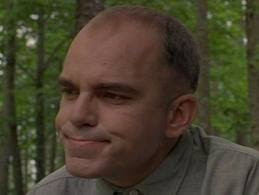
The photo is Billy Bob Thornton in Slingblade--he's our example of an insanity acquittee.

Once again, thank you for listening and please do write a review on iTunes.


****************************


This podcast is available oniTunes or as an RSS feed orFeedburner feed. You can also listen to or download the .mp3or the MPEG-4 file from mythreeshrinks.com.
Thank you for listening


Send your questions and comments to: mythreeshrinksATgmailDOTcom

Kamis, 13 Januari 2011

The Killers I've Known

Some blog readers have been asking for a post about the Arizona shooting incident. The issue of spree killing has come up on the blog before, after the Amish killings in Pennsylvania, after Virginia Tech and the Fort Hood incidents. This will officially be my third poster about shooter psychology and it's getting hard to find something new to say.

First of all, most murderers don't have multiple victims. According to the Uniform Crime Reports, the number of multiple-victim killings has remained pretty stable over the last five or so years, at about 350 per year. Almost all multiple victim killings are committed using guns, although in 1987 there was an anomaly in which 24 people were killed by poison. More about that later.

In most cases, the killer knows the victim and that's true both for single and multiple victim offenses. The nature of the relationship varies with the setting and type of killing: spree shooters most often kill co-workers or other students, while single victim killers murder their partners or drug acquaintances. Psychotic killers will usually murder a caretaker, a mother or wife, but only if the killer is a young male. Female psychotic killers tend to kill their children. It's rare for a psychotic killer to murder multiple strangers. Locally I can recall only one case like this over the last twenty years. In this case the killer suffered from a grandiose delusion, and the victims were killed in a car crash. Psychotic people can stalk or threaten political or other high profile figures, but this usually doesn't result in violence. Typically what motivates psychotic political stalkers is a delusion of some type, for example the belief that a political (or other stranger victim) is threatening them in some way. For example, one political stalker I examined believed that a U.S. Senator was a devil worshiper, and that he was destined to kill all devil worshippers. Another psychotic letter writer had a delusion about the president, although he was so thought disordered it was a little hard to sort out the "logic" behind the delusional motivation.

Multiple victim killers could be spree killers or serial killers. That 1987 anomaly with the poison deaths was partly due to Donald Harvey, a serial killer in Ohio who poisoned patients at the hospital where he worked.

Non-psychotic spree killers have the same motivations as "regular" single victim murderers: frustration over the loss of a job, the loss of a relationship, loss of a living situation, lack of money or friends, alienation from family and substance abuse. Killing is an act of desperation whether you're killing one person or many. Political motivations may come into play, but without the "nothing left to lose" factor political motivation isn't enough.

So why did the Tucson shooter act? Ya got me, I haven't examined him so we can only speculate based on what's in the news. All I can tell you about is the usual characteristics of the killers I've known.